



Businesses today often need software that fits the way they actually work. Off-the-shelf applications can be useful, but they may not always match a company’s processes, customer journeys, integrations, or growth plans. This is where Custom Application Development Services Saudi Arabia can provide a more flexible approach.
Custom application development involves designing and building software around specific business requirements. It can include web applications, mobile applications, enterprise platforms, customer portals, internal business systems, dashboards, and applications that connect with existing ERP, CRM, POS, or other business systems.
For businesses in Riyadh, Jeddah, Dammam, Al Khobar, and across the Eastern Province, the right custom application can help turn manual processes into connected digital workflows while creating a better experience for employees and customers.
Key Takeaways
- Custom applications are built around specific business requirements.
- They can be developed for web, mobile, enterprise, or internal business use.
- Custom development can connect different systems through APIs and integrations.
- Businesses can start with essential functionality and expand the application as they grow.
- Arabic and English interfaces can be considered for Saudi-focused applications.
- Security, scalability, performance, and user experience should be planned from the beginning.
- The right development partner should understand the business process, not only the technology.
What Is Custom Application Development?
Custom application development means creating software specifically for the needs of a particular business or organization.
Instead of changing the business process to fit an existing application, the development team designs the application around the company’s requirements.
A custom application could be:
- A customer portal
- A business management platform
- A booking system
- A logistics application
- A healthcare platform
- An education management application
- A retail management application
- A restaurant platform
- An employee management system
- A mobile application
- A web application
- An enterprise application
- A reporting dashboard
- An internal workflow system
The scope depends on what the business needs to accomplish.
Custom Application Development vs. Ready-Made Software
Ready-made software is designed for a broad group of users. It can be a good choice when its existing features closely match your business requirements.
Custom application development takes a different approach.
Ready-Made Software
Usually provides:
- Pre-built features
- Standard workflows
- Faster initial deployment
- Fixed functionality
- Limited customization depending on the platform
Custom Application Development
Can provide:
- Business-specific workflows
- Custom user experiences
- Specific dashboards
- Unique functionality
- Custom integrations
- Flexible permissions
- Tailored automation
- Greater control over future development
The right choice depends on the business. Custom development is not automatically better for every company; it becomes valuable when standard software cannot adequately support the required workflow.
What Are Custom Web Application Development Services?
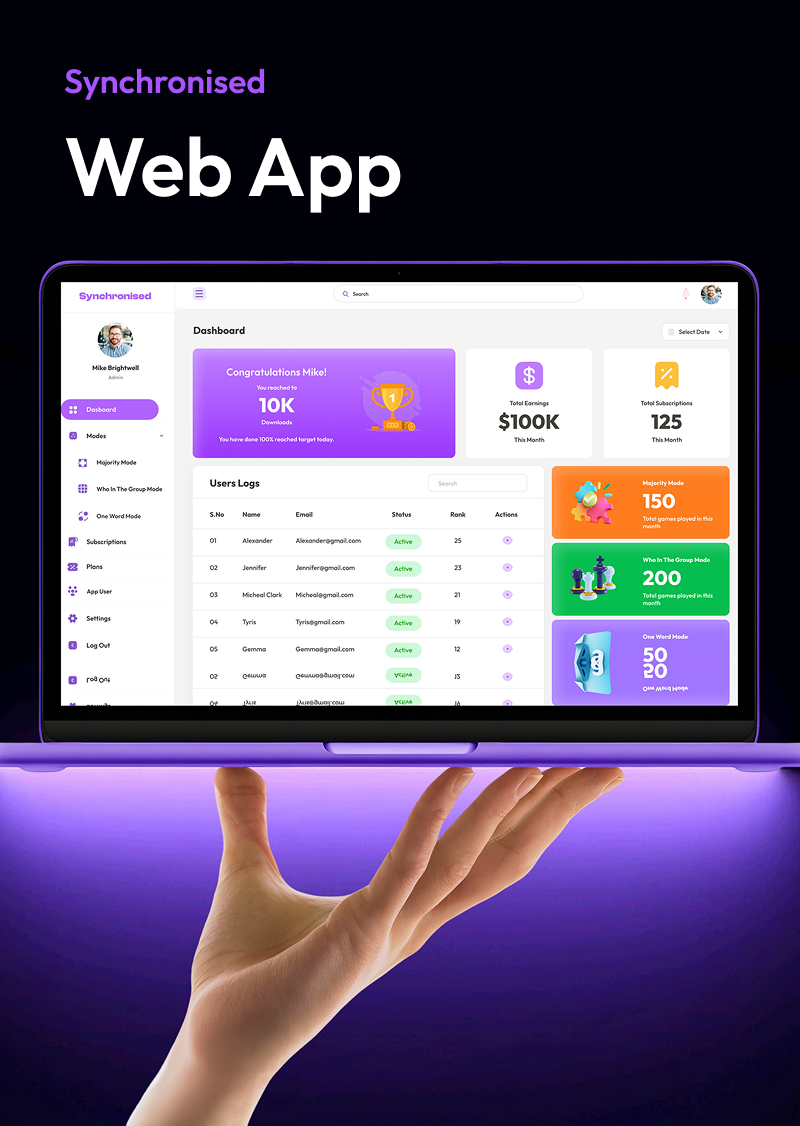
Custom web application development services involve building applications that users access through a web browser.
Unlike a traditional informational website, a web application allows users to perform actions and interact with business data.
Examples include:
- Customer portals
- Employee portals
- Booking platforms
- Online management systems
- Business dashboards
- Vendor portals
- Learning platforms
- Order management systems
- Workflow applications
A web application can also connect to other business systems through APIs.
For example, a custom application could connect a customer-facing portal with a company’s CRM, ERP, payment system, or inventory platform.
Custom Mobile Application Development
Businesses may also require custom applications for smartphones and tablets.
Custom mobile application development can be used for:
- Customer apps
- Employee apps
- Delivery applications
- Booking applications
- E-commerce
- Loyalty programs
- Field-service applications
- Internal business tools
Depending on the project, developers may build applications for iOS, Android, or both.
The important consideration is not simply creating an app, but determining what the app needs to accomplish and how it fits into the wider business ecosystem.
Why Custom Applications Matter for Saudi Businesses?
Saudi businesses operate across many industries, and each industry has different workflows.
A logistics company in Riyadh may need a completely different application from a healthcare business in Jeddah or a retail company operating across Dammam and Al Khobar.
Custom applications can be designed around requirements such as:
- Arabic and English interfaces
- Right-to-left Arabic layouts
- Saudi customer journeys
- Local business processes
- Multiple branches
- Different employee roles
- Approval workflows
- Customer portals
- Payment integrations
- ERP integrations
- CRM integrations
- POS integrations
- Reporting dashboards
For larger organizations, custom enterprise application development can also help connect departments and reduce disconnected processes.
Benefits of Custom Application Development
1. Designed Around Your Business
The application can reflect the way your teams actually work instead of forcing employees into an unsuitable workflow.
2. Better User Experience
The interface can be designed around the specific needs of employees, customers, administrators, or other users.
3. Business Process Automation
Repetitive manual processes can potentially be converted into digital workflows.
4. System Integration
Custom applications can connect with existing systems through APIs and other integration methods.
5. Scalability
The application can be planned to accommodate additional users, branches, features, or workflows as the business grows.
6. Centralized Data
Instead of managing information across disconnected spreadsheets and systems, businesses can create a more connected environment.
7. Competitive Differentiation
A custom application can provide functionality specifically designed around a company’s products, services, and customer experience.
How Does Custom Application Development Work?
A professional custom development project normally starts with understanding the problem before writing code.
Step 1: Requirements Discovery
The development team identifies:
- Business goals
- Users
- Existing processes
- Problems
- Required features
- Integrations
- Security requirements
- Budget and timeline considerations
Step 2: Application Architecture
The technical structure of the application is planned, including data, users, integrations, and system components.
Step 3: UI/UX Design
The screens and user journeys are designed before development.
This helps stakeholders understand how the application will work.
Step 4: Development
Developers build the application according to the approved requirements and designs.
Step 5: Integration
The application can be connected to relevant systems such as ERP, CRM, POS, payment platforms, or third-party services where required.
Step 6: Testing
The application should be tested for:
- Functionality
- Security
- Performance
- Mobile responsiveness
- User permissions
- Integration reliability
- Different devices and browsers
Step 7: Deployment
After testing and approval, the application is deployed for users.
Step 8: Maintenance and Improvement
Applications often require ongoing updates, security improvements, bug fixes, performance optimization, and new functionality.
Custom Enterprise Application Development
Large organizations often have complex processes involving multiple departments, locations, and user types.
Custom enterprise application development can support workflows such as:
- Employee approvals
- Procurement
- Document management
- Internal requests
- Customer management
- Reporting
- Branch operations
- Inventory
- Finance-related workflows
- Departmental dashboards
For an enterprise operating across Saudi Arabia, the application can also be structured around different branches, departments, user permissions, and business units.
The goal is to create a system that supports the organization’s workflow rather than adding another disconnected tool.
How to Choose a Custom Application Development Company?
Choosing a custom application development company requires looking beyond technical skills.
Business Understanding
The development team should first understand the problem your application is expected to solve.
Technical Expertise
Check whether the team has experience with the platforms, programming technologies, databases, APIs, and integrations required for the project.
UI/UX Capability
A technically strong application can still fail if users find it confusing.
Security
Ask how authentication, authorization, data protection, backups, and security testing will be handled.
Scalability
Consider whether the application can handle additional users, branches, data, and features in the future.
Integration Experience
If the application needs to communicate with ERP, CRM, POS, payment, or other platforms, integration experience is important.
Support
Clarify how maintenance, technical support, updates, and future development will be handled.
Safha Technologies’ Approach
Safha Technologies approaches custom software projects by combining business analysis, UI/UX design, application development, integrations, and business automation.
Depending on the project requirements, Safha’s digital services can include:
- Custom software development
- Custom web application development
- Mobile application development
- UI/UX design
- Odoo ERP
- CRM
- POS
- LMS
- AI solutions
- Business automation
- Document management
- Attendance solutions
- API integrations
- Website development
The focus should be on understanding the business workflow first and then selecting the technology and architecture that best supports the requirements.
Conclusion
Custom Application Development Services Saudi Arabia can help businesses build digital applications around their actual processes, customers, employees, and growth plans.
From a customer portal or mobile application to a complex enterprise platform, custom software can provide functionality that may not be available in standard applications.
For businesses in Riyadh, Jeddah, Dammam, Al Khobar, and the Eastern Province, the right development partner should combine technical expertise with an understanding of local business requirements, user experience, integrations, security, and long-term scalability.
If your business has a process that is difficult to manage with existing software, custom application development may be worth exploring.
Build a Custom Application Around Your Business
Discuss your requirements with Safha Technologies and explore a digital solution designed around your business needs.